
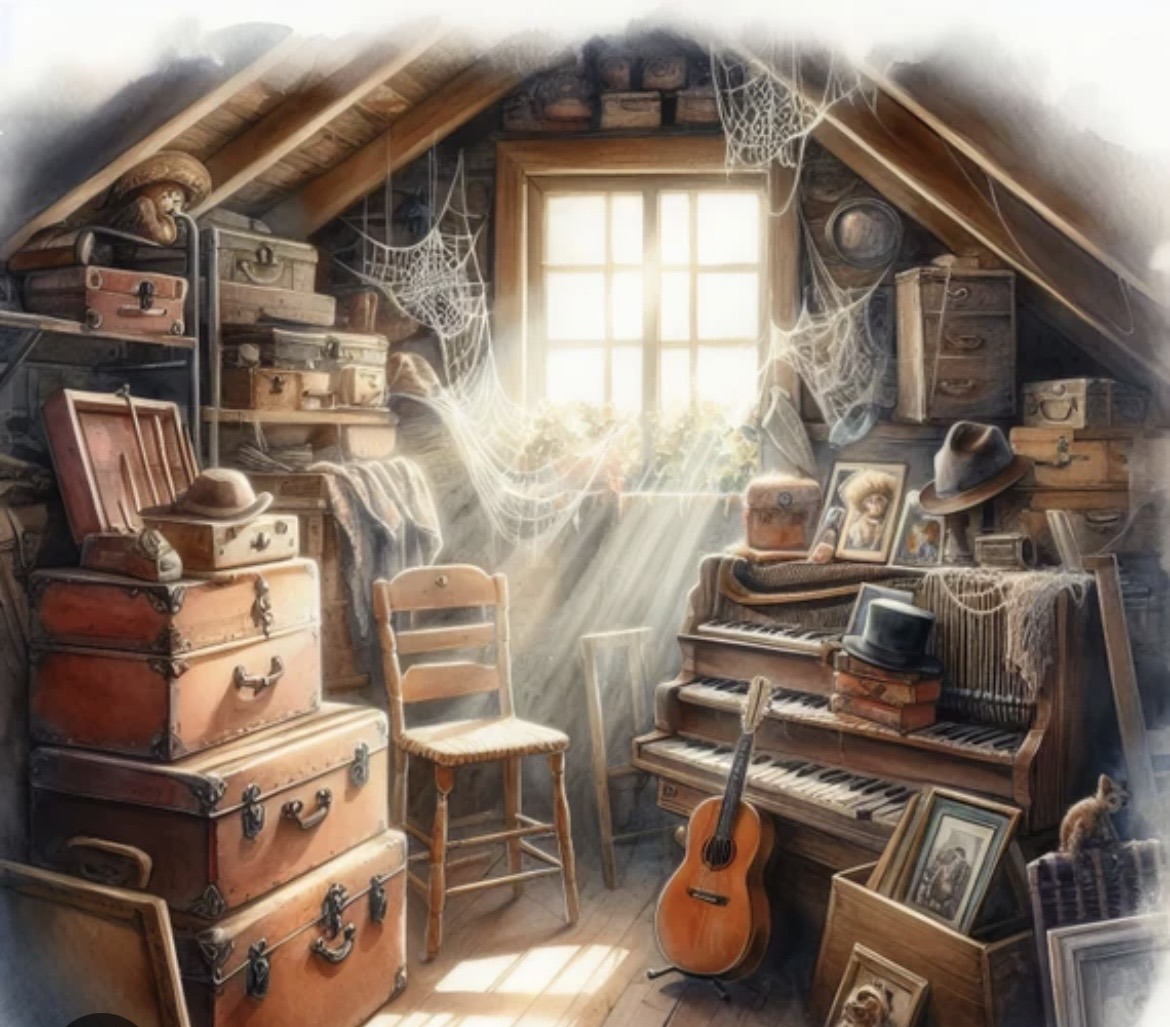
After my rape I became drawn to the attic room in my family’s home, in my years before my rape an attic definitely wouldn’t have been a place I’d had been in especially by myself. I’d had been too scared in the prior years. However after my rape, I became more drawn to dark places, my bedroom was bright colored and lively, but not that attic, yet afterwards I absolutely loved this dark attic room, I slept in there every night and chilled in there during the day, it was my spot. Not only is a attic a dark place, it’s also a place that isn’t that frequently visited or utilized by people, hence safety, and being untouched, whereas a bedroom is used and touched more frequently, also a attic often is a place where old, lost or even damaged things are stored away and re found hence restoration wow! Basically I knew deep down I was broken and damaged after my rape and I was hiding myself away and searching for the part of me that was now lost! Wow! Deep down I greatly wanted my old self/life back. I wanted to be restored wow! symbolically, an attic can represent a kind of paused identity—a place where earlier versions of yourself feel preserved. After trauma, that can become emotionally important because part of you may feel like it needs to “go back” or hold onto what felt safer before.
- Posted on June 9, 2026
It can also be:
- protecting a version of yourself that feels uninjured
- or creating a space where you don’t have to fully engage with who you had to become after trauma
- Attics are usually:
- quieter
- less accessible to others
- more controllable (you can retreat there without interacting)
- That combination can feel stabilizing if your nervous system has been overstimulated or violated. It’s not just “darkness”—it’s privacy without confrontation. Darkness isn’t just emotional symbolism—it’s also sensory:
- less visual stimulation (calmer for an overloaded nervous system)
- more control over what you have to process visually
- fewer “eyes on you” feelings (which can matter a lot after sexual trauma)
- a sense of enclosure or boundary (“I’m not exposed here”)
- For many people, darkness functions like a visual boundary.
After my rape I didn’t sleep in my bedroom and had no desire too, let’s be honest a bedroom is a place of “intimacy” hence sexual
My reaction made sense in a very direct, body-level way.
After a sexual assault, the brain often starts doing something called context reclassification: it re-labels places, objects, or situations that used to feel neutral or safe as potentially “linked” to danger, exposure, or sexual vulnerability.
A bedroom is especially powerful in that system because, as I pointed out, it’s culturally and physically associated with:
- sleep (vulnerability, loss of control)
- privacy (being alone, less ability to react)
- intimacy and sex (even if nothing sexual happened there)
- clothing changes / bodily exposure
So after my rape, my nervous system basically went:
“This space = too similar to vulnerability + intimacy + loss of control. I need distance.”
This doesn’t mean this was what I wanted or chose—it was more like a protective alarm system misfiring or over-generalizing to keep me from feeling that level of vulnerability again. Wow! Lastly an attic is a place of old items that are imperishable hence the old or damaged items people refuse to let go, because though they’re old or damaged they still hold value. Wow! I was damaged and broken, but I was holding on still because deep down I knew I still had value! The attic was reminding me of this and giving me some hope!